Posted bid documents
Specifications and drawings included, in both official languages, at the same time and of equal quality (Treasury Board guide).
 Request a quoteRequest a quote ↗
Small craft harbours are the federal system of harbours for commercial fishers and other users. Each wharf, breakwater, launching ramp or dredging job goes out as a package of specification sections and drawings. This post lists the sections it draws on and their marine terms in English and French, as the National Master Specification words them.
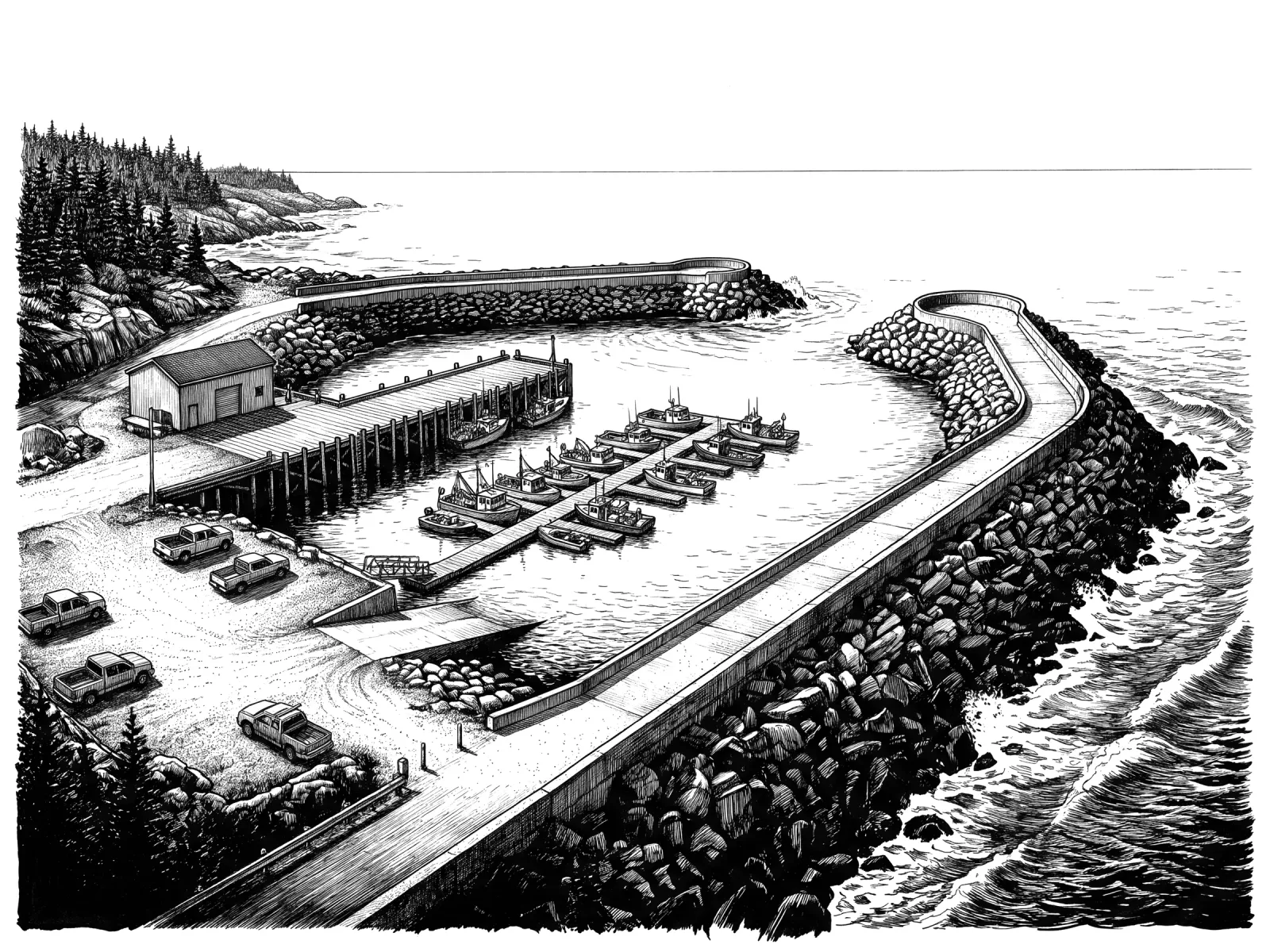
For the people who design and build them, a small craft harbour is a run of marine jobs: rebuilding a wharf or a breakwater, placing a floating wharf, pouring a launching ramp, dredging the basin, or removing an old wharf and restoring the seabed. We have translated packages of each kind, for federal owners and the consulting engineers who design the work. For one example, see how we translated the studies of two Arctic harbours for a French-speaking bidder.
The jobs a harbour package covers
A harbour package is a set of specification sections and the drawings that go with them. The sections come from the National Master Specification, the federal master specification, and a harbour job draws on a predictable part of it: the general requirements and environmental procedures, the demolition of the old structure, concrete, piles, rip-rap, and the waterway and marine construction sections of Division 35.
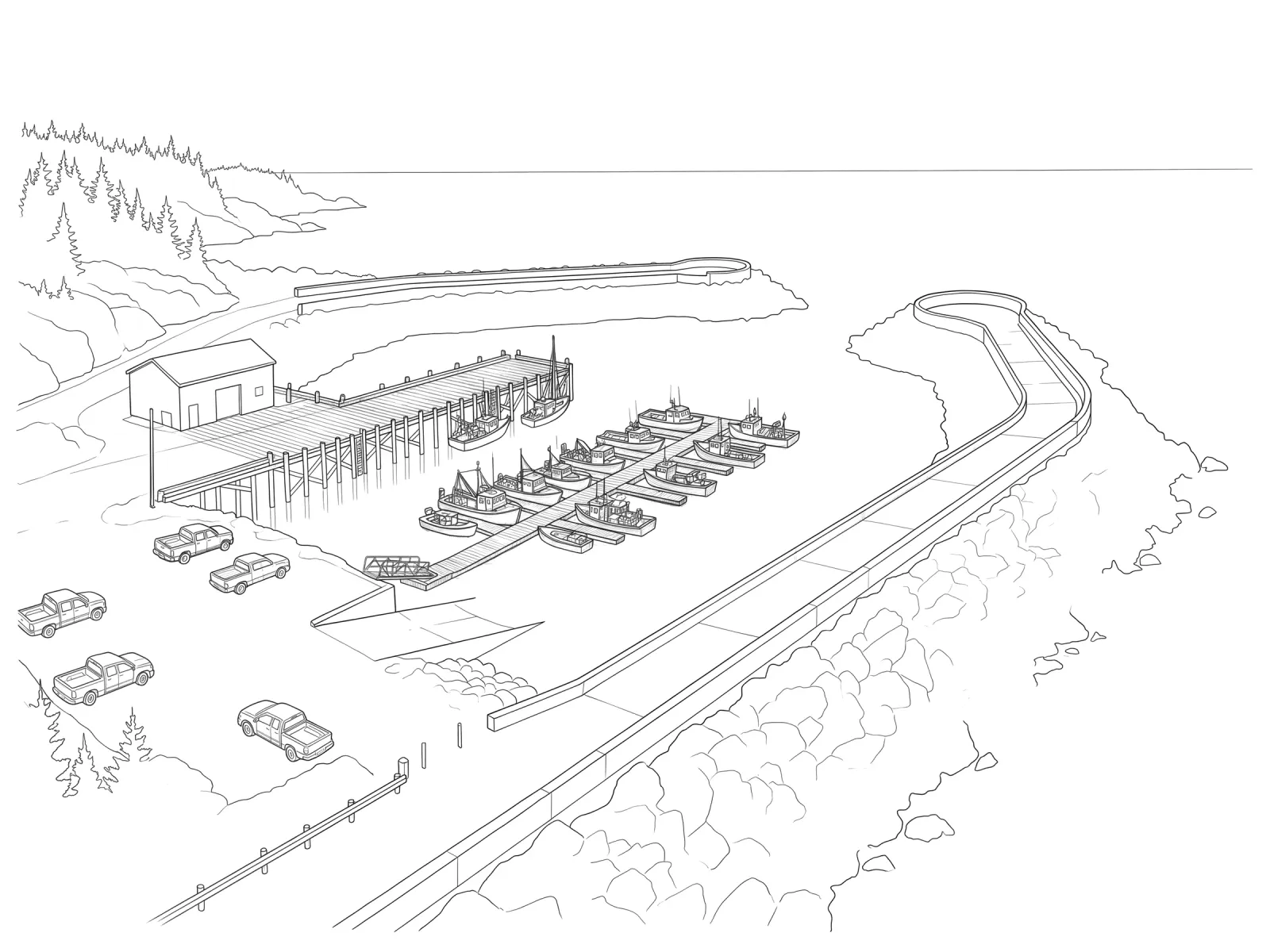
A launching ramp can be a short package; a full wharf repair runs to dozens of sections with its drawings. Either way, the drawings name the same structures as the sections: the breakwater on the plan is the structure the breakwater section specifies, and the bidder prices it from both.
The terms of every structure the bidder prices. When a callout on the drawing and the title of the section use different words, a bidder working in French has to guess whether they are the same thing, and a guess in a tender becomes a question, an addendum or a claim. The official French titles of the National Master Specification settle most of them:
A wharf is a quai, and a finger dock an appontement. Our construction glossary and the NMS divisions in English and French hold the rest.
Posted bid documents do. Under the Treasury Board’s guide to official languages in federal procurement, posted bid documents, specifications and drawings included, appear in both official languages, at the same time and of equal quality. The solicitation and the contract set the rest. The Official Languages Act itself binds the federal institution, not your drawings: our guide to the Official Languages Act on federal projects sets out what binds you as a consultant or contractor.
Posted bid documents
Specifications and drawings included, in both official languages, at the same time and of equal quality (Treasury Board guide).
The solicitation sets
The rest: the language of your deliverables, wherever the site is.
We work from one term base, so the sections and the drawings say the same thing. The specification sections use the official NMS French where the text is standard, and the AutoCAD drawings are translated in the DWG, so every callout comes back in the terms of the section that specifies it. See how we handle National Master Specification sections, the rest of our transportation translation work, and our post on transit-system documents. To see where your own past packages disagree with themselves, send one to the free terminology check.
Send your package: specs, drawings or reports. We reply with a price and a date.
FreeFree terminology checkUpload a recent translated deliverable. We return a short report of every inconsistent term.