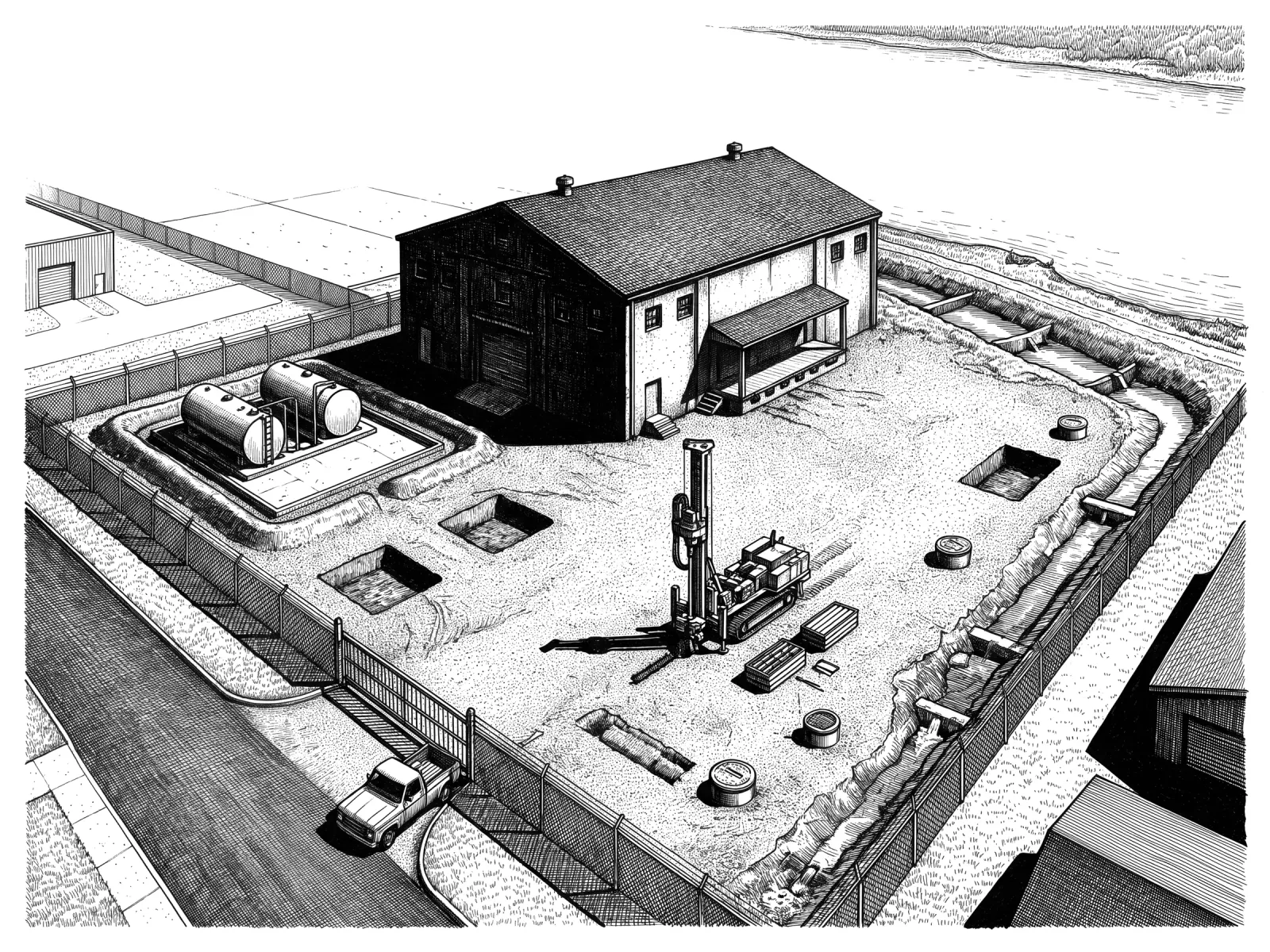
Phase I
CSA Z768-01
- Historical records review
- Site visit
- Interviews
- Areas of potential concern, no sampling
 Request a quoteRequest a quote ↗
A Phase 1 environmental site assessment reviews a property's records, visits the site and interviews people who know it, to find actual or potential contamination without sampling. In Canada the reference standard is CSA Z768-01. In French the report is an évaluation environnementale de site (ÉES) or, in Quebec, an étude de caractérisation de phase I.
A Phase 1 environmental site assessment is the study read to decide whether a property may be contaminated, often before it changes hands, is financed or is built on. In a bilingual file, that decision rests on two versions of one report, and they must say the same thing.
A Phase I ESA looks for actual or potential contamination from what can be learned without sampling: the property’s history in records, aerial photographs and fire insurance plans, a site visit, and interviews with people who know the property. The output is a Phase I environmental site assessment report, and its sections follow a predictable order.
Quebec’s environment ministry publishes the most explicit list we have read. Its control table for a Phase I study, filled in and signed by the professional who signed the study, runs section by section through what the report must hold:
The ministry's Phase I control table: in French, filled in and signed by the professional who signed the study, attached when the study goes to the ministry.
The historical records review lists the activities on the site from its natural state to today and the contaminants each one could have left. The interpretation names every area of potential concern with its source (spills, tank leaks, transfers, equipment), the contaminants it could release and what they could reach: soil, groundwater and other media. The conclusion and recommendations say what comes next, often a Phase II.
Phase I
CSA Z768-01
Phase II
CSA Z769-00
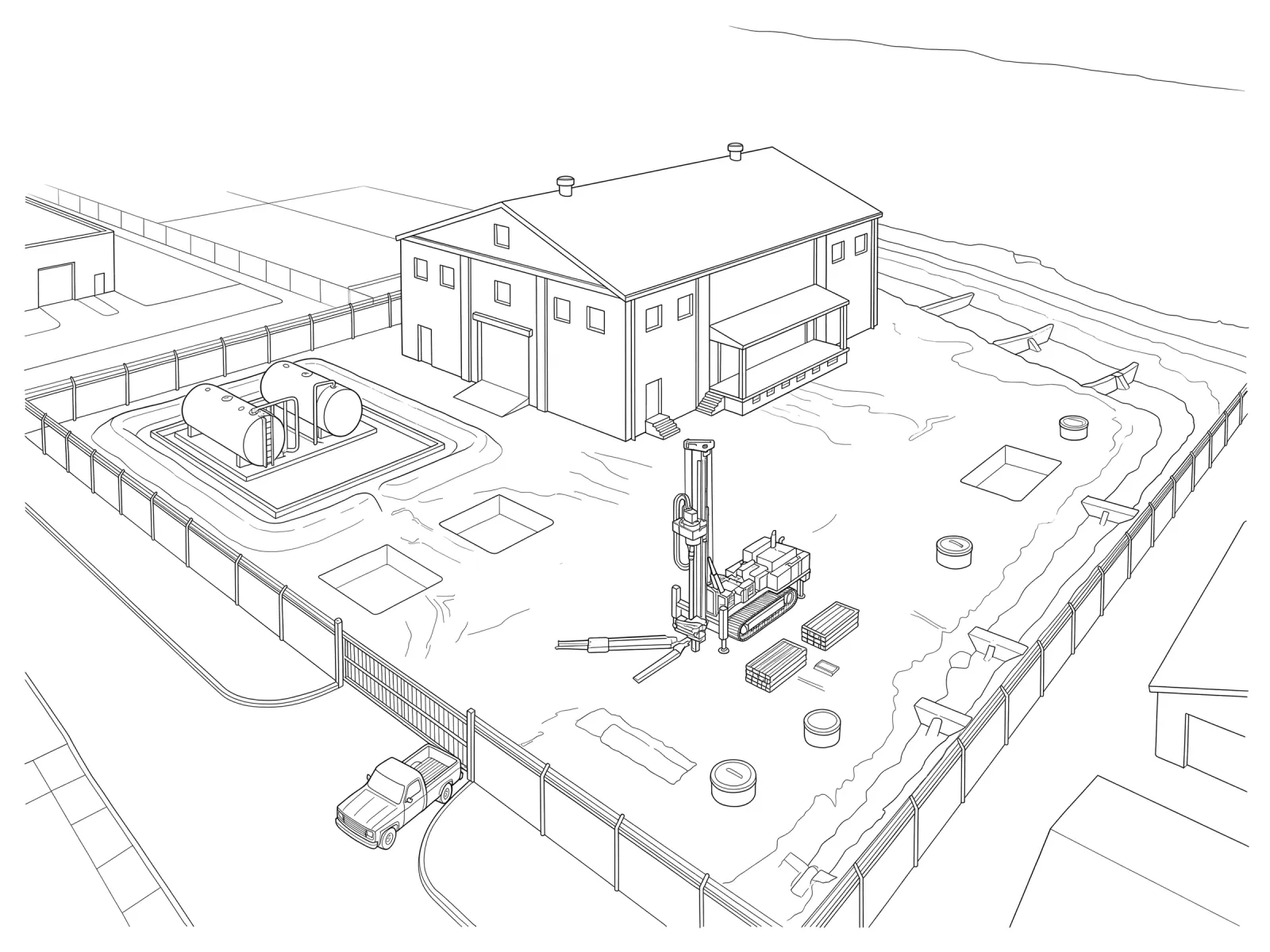
The Phase II environmental site assessment samples. Phase I follows CSA Z768-01 and Phase II CSA Z769-00, the two standards the City of Calgary’s terms of reference are derived from. The ministry’s Phase II-III control table shows what the report adds: the sampling plan for soil, groundwater, surface water or sediments, the method (test pit or borehole), the borehole logs, the monitoring wells, the accredited laboratory and its quality control, the chemical results against the applicable criteria, and the limits of the contaminated zones.
For a translation, the Phase II environmental site assessment report is a different document. Its conclusions rest on numbers: which sample exceeded which criterion, and where. Since June 1, 2024, Quebec requires the field work of phases II, III and beyond, and the research for a Phase I study, to follow the ministry’s current characterization guide. One study can cover both the Phase I and Phase II environmental site assessments; the professional then fills in both control tables.
Two names, and the right one depends on where the report goes:
One study, two French names
Consultants and federal files
Quebec's environment ministry
A Phase II is then an ÉES de phase II or an étude de caractérisation de phase II. Pick one per report and keep it: a study that calls itself an ÉES on the cover and an étude de caractérisation in its conclusion reads as two documents.
The parts someone signs, prices or acts on. A study submitted to Quebec’s environment ministry must be in French, so an English report needs a French version before it goes. The ministry publishes its guide and its control tables in French, and the professional checks a Quebec study against them section by section. Whichever language the report was written in, these must match exactly in the other:
If the two versions disagree on the recommendation, the lender and the ministry are reading different conclusions. The appendices follow the same rule: when a figure labels a zone differently from the text, or a borehole log stays in the other language, a reviewer has to ask which version governs. This describes the rules as we apply them in November 2026; it is not legal advice.
We have translated contaminated-site documents for federal sites: soil management plans and environmental quality reports for defence sites, hazardous materials reports in a decommissioning specification, sediment sampling and seabed remediation for a wharf removal.
We work from one term base per project, so the summary, the tables, the figures and the drawings say the same thing, and the French name of the study stays the one chosen on the cover. Environmental terms come from the client’s past reports when there are any, and from the National Master Specification translation memory for the specification sections that often follow an assessment. Drawings and figures in AutoCAD come back as DWG with the same labels as the text.
When the assessment is part of a larger approval, our post on environmental impact assessment in Canada sets out which impact assessment documents must be in English and French, and our environmental translation page covers the environmental monitoring reports that follow a project. To see where your own past reports disagree with themselves, send one to the free terminology check.
Send your package: specs, drawings or reports. We reply with a price and a date.
FreeFree terminology checkUpload a recent translated deliverable. We return a short report of every inconsistent term.