Hazard
Aléa
A potentially damaging event, here the flood, that may cause loss of life, damage or disruption.
 Request a quoteRequest a quote ↗
Flood mapping puts the results of hydrologic and hydraulic modelling on a map, to show where water reaches in a given flood. A study published in both languages needs one French term for each mapped zone, and the federal glossary itself offers three for the floodway.
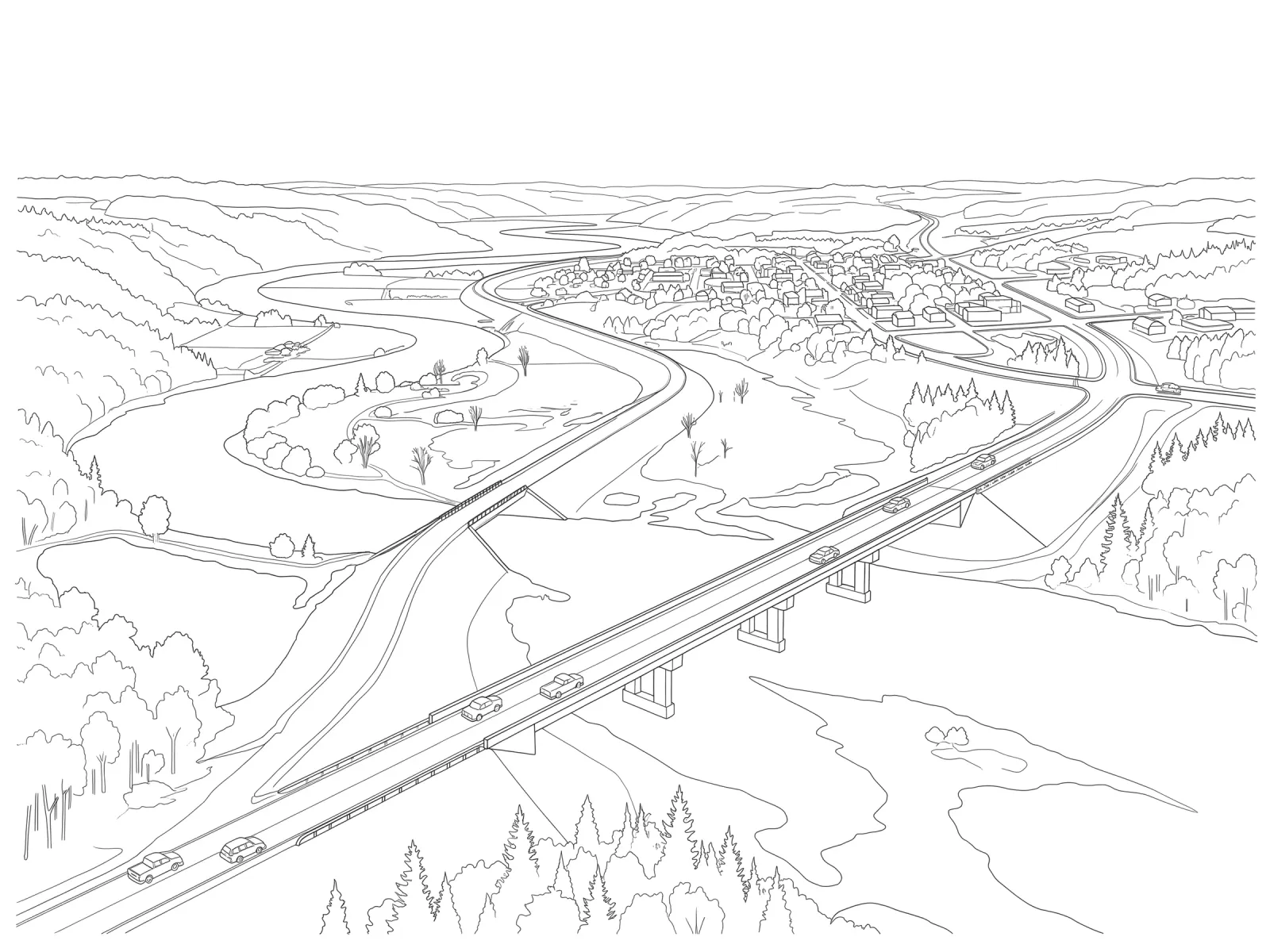
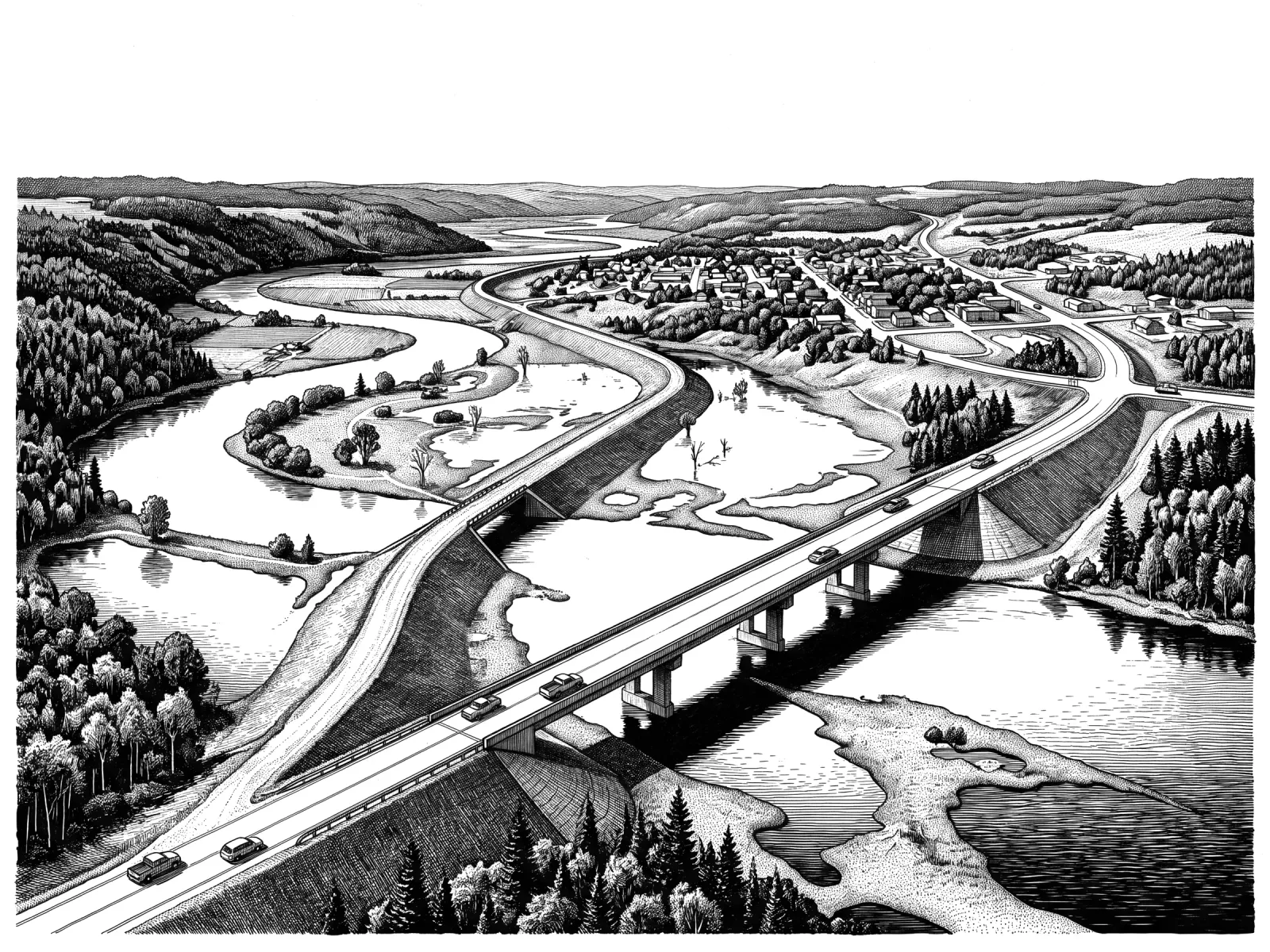
Flood mapping is “the process of applying hydrologic, hydraulic, or hydrodynamic modelling outputs onto a base map to depict flood characteristics”, in the words of the federal flood mapping guidelines. In French the same process is cartographie des zones inondables.
No. A flood hazard map shows the flood: where water reaches, how deep and how fast. Flood risk mapping goes one step further and adds what the flood would do to people, buildings and land. The federal glossary keeps the two apart in both languages: a hazard is an aléa, a risk is a risque. So a flood hazard map is a carte des aléas d’inondation, and a flood risk map a carte des risques d’inondation.
Hazard
Aléa
A potentially damaging event, here the flood, that may cause loss of life, damage or disruption.
Risk
Risque
The hazard combined with its likelihood and its adverse consequences: economic, social, environmental and human.
Local Flood Hazards
Risques locaux d'inondation
Aléas locaux d'inondation
One word turns a map of where water goes into a map of what the flood would do.
The slip is easy to make because everyday French uses risque for both. It changes what a map claims to show.
It depends on which system the map belongs to. The federal glossary defines the floodway as the channel and adjacent areas “where water depths and velocities are typically greater and more hazardous”, and the flood fringe as the rest of the floodplain. Its French version names the floodway zone principale in the entry, canal d’évacuation in the definition of zone secondaire and canal d’évacuation des crues under plaine inondable. The flood fringe is both zone secondaire and périmètre d’inondation.
Federal glossary: by depth and velocity
Quebec regulation: by flood recurrence
floodway
flood fringe
zone de grand courant
high-velocity flood zone (20-year)
zone de faible courant
low-velocity flood zone (100-year)
All five French names appear on one federal page.
Quebec draws its zones another way. Its regulation defines the zone inondable de grand courant by a 20-year flood recurrence and the zone inondable de faible courant by the 100-year flood beyond it; its official English calls them the high-velocity and low-velocity flood zones. Quebec’s new maps also add intensity classes. A zone de grand courant is therefore not the federal floodway: one is drawn by flood recurrence, the other by depth and velocity, even though both start at the river. Translate one as the other and the label names a zone its own rules do not define.
A study needs one French name per zone, chosen for its jurisdiction and kept from the report to the legend.
Every term that names a zone, a flood or a probability. Most are fixed by the federal glossary; the rest come from the federal term bases and translation memories we work with.
Where the sources hold two forms, as with période de retour and période de récurrence, we follow the document’s jurisdiction: the federal glossary uses période de retour, Quebec’s regulation speaks of a flood de récurrence de 20 ans. More construction and engineering pairs are in our construction glossary.
We start from one term base for the whole study, so the report, the model notes and the map legends name each zone the same way. The federal or Quebec choice is made once, at the start, and recorded with its source. Reports and their appendices go through our technical translation process, and the map legends take the same terms.
Flood studies often sit inside larger work: see our civil and infrastructure translation and environmental translation pages, and our post on environmental impact assessment in both languages. Whether a federal study must be published in both languages is covered in our Official Languages guide. To see where your own documents disagree, send one to the free terminology check.
Send your package: specs, drawings or reports. We reply with a price and a date.
FreeFree terminology checkUpload a recent translated deliverable. We return a short report of every inconsistent term.