
Standing offers: what a call-up is, and when its specifications and drawings must be posted in English and French.
A standing offer is a supplier's offer to provide goods or services at pre-arranged prices and terms, and each call-up the government makes against it forms a separate contract. When a call-up's specifications and drawings go to tender, the Treasury Board's guide says they must be posted in English and French at the same time.
What is a standing offer?
A standing offer is an offer from a potential supplier to provide goods or services at pre-arranged prices, under set terms and conditions. The government orders against it with a call-up, and a separate contract is entered into each time a call-up is made; until then, CanadaBuys states, neither party has a contractual obligation.
Public Services and Procurement Canada (PSPC) uses standing offers for recurring needs, when departments repeatedly order the same goods or services, and for needs whose demand is not known in advance. Each call-up is capped at the dollar value the standing offer sets. Several suppliers can hold standing offers for the same work, and the Request for Standing Offer (RFSO) then sets how call-ups are shared: by rank with a right of first refusal, or by fixed percentages, the next call-up going to the supplier furthest below its share.
- standing offer
- offre à commandes
- call-up
- commande subséquente
- Request for Standing Offer (RFSO)
- demande d'offres à commandes
- supply arrangement
- arrangement en matière d'approvisionnement
- Public Services and Procurement Canada (PSPC)
- Services publics et Approvisionnement Canada (SPAC)
CanadaBuys and AchatsCanada, read November 9, 2026
In French, a standing offer is an offre à commandes and a call-up is a commande subséquente. This post sets out what CanadaBuys and the Treasury Board say, read on November 9, 2026, and what it means for the language of your deliverables. It is not legal advice.
How is a standing offer different from a supply arrangement?
Both are methods of supply, and neither is a contract on its own. A standing offer fixes prices and terms in advance, and a call-up accepts it. A supply arrangement prequalifies a pool of suppliers who then compete for each requirement, or negotiate it; PSPC uses one when a standing offer does not suit because each requirement varies.
- What it isAn offer at pre-arranged prices and termsA pool of pre-qualified suppliers under set conditions
- Is it a contract?No. Each call-up is a separate contractNo. Each contract awarded under it is
- PriceFixed in the standing offerOften a ceiling, negotiated down for each requirement
- How work is orderedA call-up, up to the limit the standing offer setsA bid solicitation to the pool, or a negotiation
- Used whenThe need recurs and can be defined well enough for firm pricesThe need recurs but varies from one requirement to the next
- In Frenchoffre à commandesarrangement en matière d'approvisionnement
Five federal types
- NMSONational mastermany departments across Canada
- RMSORegional mastermany departments in one area
- NISONational individualone department across Canada
- RISORegional individualone department in one area
- DISODepartmental individualPSPC on behalf of specific departments
PSPC issues five types of standing offers, by area and by the number of departments that use them, and departments and agencies can also set up their own. Standing offers are generally issued on April 1, the start of the federal fiscal year, and the Request for Standing Offer can be published months before. Under either method, the documents a department posts as bid documents go up in both official languages.
What does a call-up mean for the language of your deliverables?
When a call-up’s work ends in a tender, the specifications and drawings you deliver become part of the bid documents, and those are posted in both official languages. Since both versions go up together, the tender waits for the French. The Treasury Board’s guide to official languages in federal procurement is explicit, and it names specifications and drawings produced by a third party, which is what a consultant’s deliverable is.
For a deliverable meant for publication or for the public, the guide (s. 3.1.3) asks the contract either to require it in both languages or to give the Crown the rights to translate and publish it. It also asks departments to plan adequate time and a budget for translation when they plan the procurement (s. 3.1.1). Read each call-up for its language clause: it tells you whether the French is yours to deliver, and by when.
English and French versions must be posted simultaneously and be of equal quality. This practice also applies to accompanying documents (including specifications, architectural drawings or standards) produced by a third party, regardless of their technical or specialized nature.
Where the tender is then published, and which language each portal sets, is in our post on where a CanadaBuys tender is published; what the bid documents hold is in our post on Quebec tenders. Our guide to official languages on federal projects covers the rest of the Official Languages Act.
Where does translation fit in a call-up?
Inside one call-up
- 01Call-up issued. The scope, the deliverables, the call-up limit and the language clause are set. Ask now for the owner’s term list and the packages already delivered under the same standing offer.
- 02Design. Terms that recur across the package, such as the structures, the materials and the owner’s own names for things, are settled first, in both languages.
- 03Specifications and drawings. Sections of the National Master Specification (NMS) take its official French, and drawing text is translated in the DWG files.
- 04Review and hand-over. A second linguist reviews everything, and both versions go to the owner together, ready to be posted on the same day.
- 05Addenda. Each addendum arrives with its own deadline and is translated in the terms of the original package.
On a breakwater reconstruction, we translated 35 documents under the NMS, 42,995 words, in 26 days.
What do call-up packages look like?
Technitrad has translated under federal standing offers since 1987, NMS construction specifications and their AutoCAD drawings included, as each call-up arrives. Engineering firms also bring us the packages they deliver to their owners. Six of them, by type:
- Translating under federal standing offers since1987
- Words translated under federal standing offers since 202112M+
- AutoCAD drawings translated4,000+
- Wharf constructionSpecifications and supporting drawings67,931 words
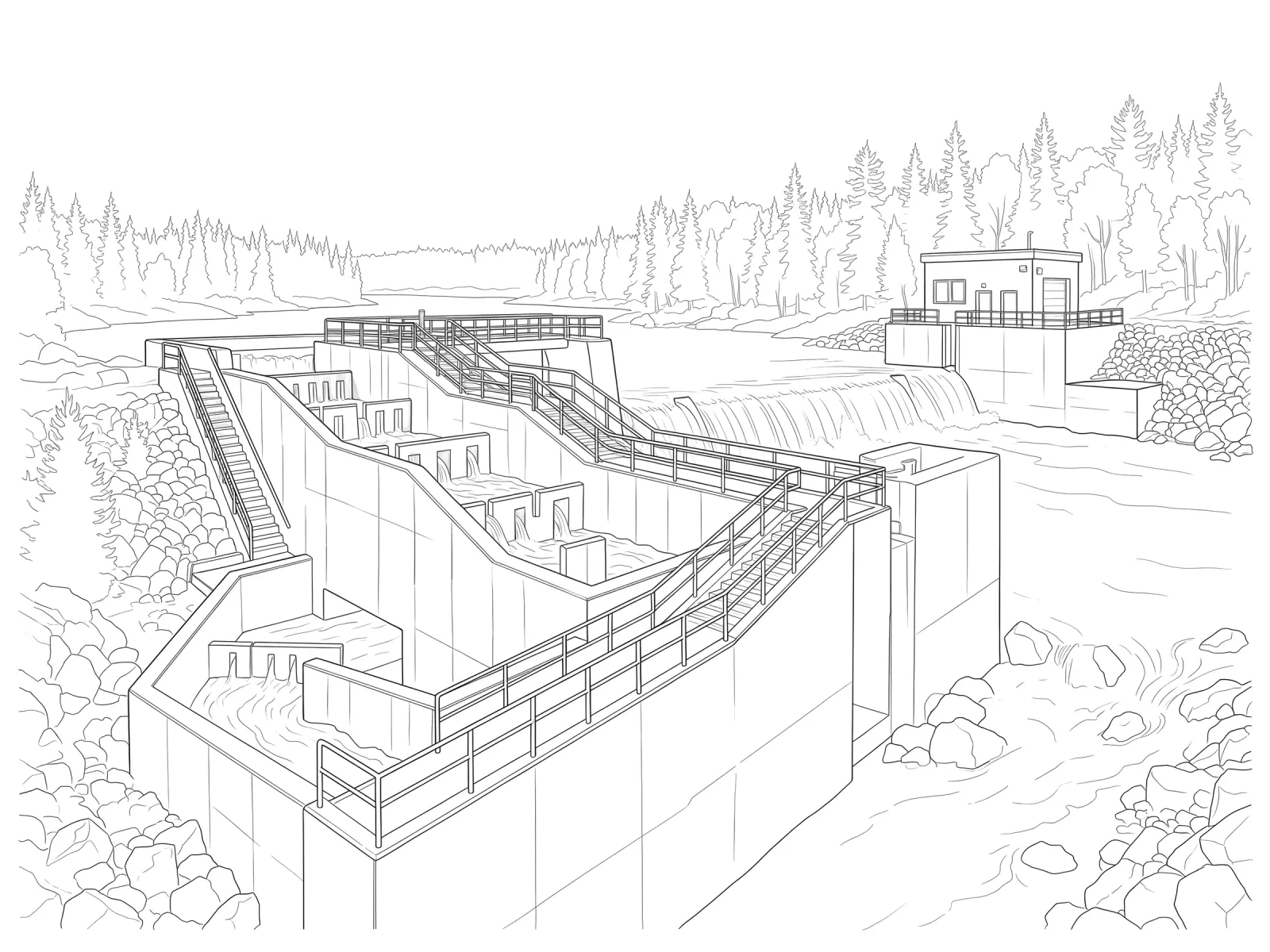
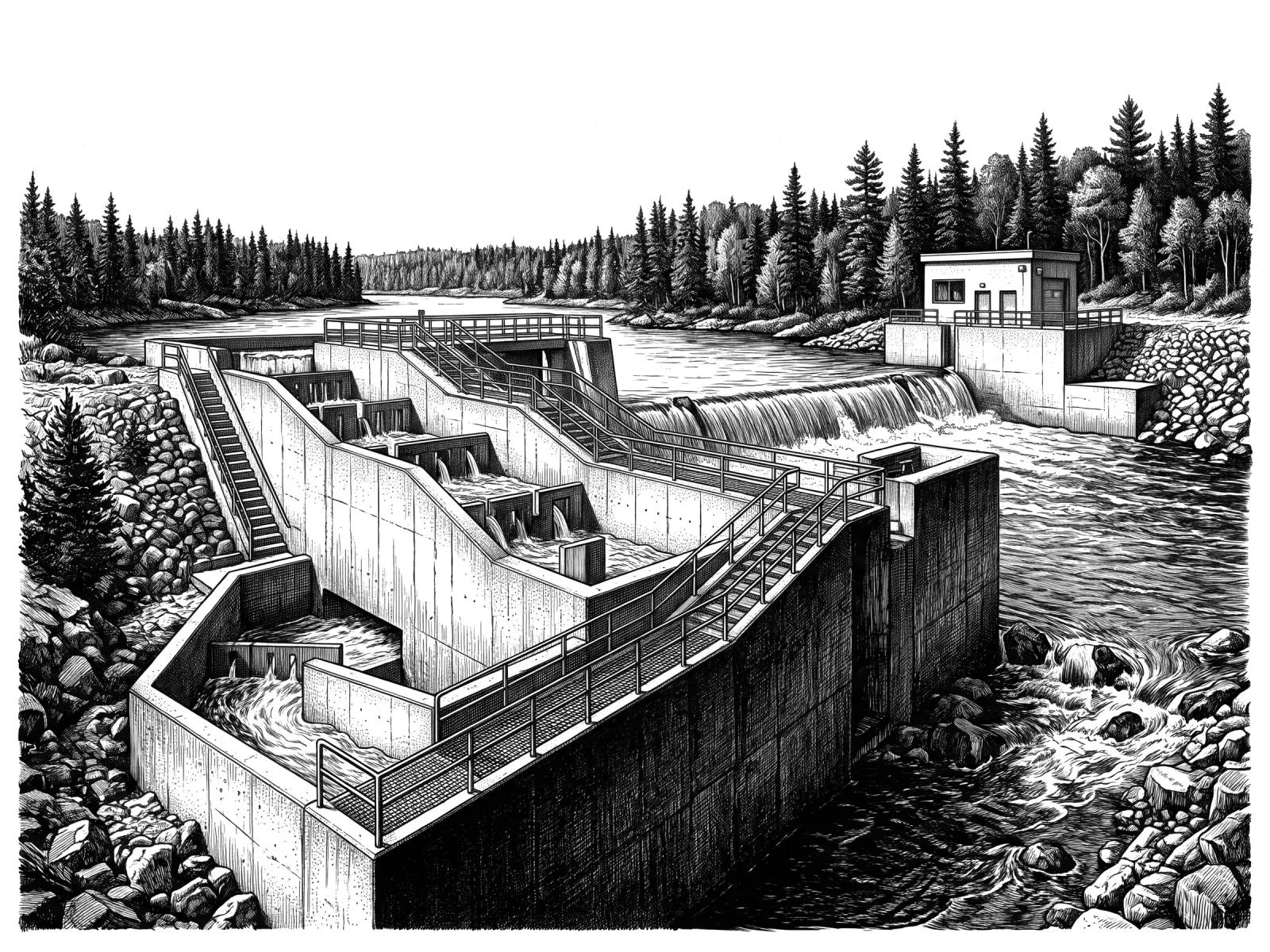
- Fishway reconstructionNMS sections, site plan and structural drawings53,448 words, 19 drawings
- Breakwater reconstruction35 documents under the NMS42,995 words in 26 days
- Camp decommissioning26 documents under the NMS, hazardous materials reports included59,583 words
- Ferry terminal water supply101 documents, AutoCAD drawings included: civil, mechanical, electrical, process and structural121,945 words
- Marine facilities maintenanceA construction standing offer for 12 facilities: description, execution, safety and quality control, 15 NMS sections, French to English27,184 words
We also translate requests for proposal from French to English: an RFP for diagnostics and a master plan around a bridge (30,600 words), and a seismic study RFP with pricing tables and reference drawings (23,200 words).
How do you keep terms the same from one call-up to the next?
Give the standing offer one term base. Call-ups under one standing offer come from the same owner, often for the same kind of structure, months apart and sometimes to different linguists. A term base built from the first packages and approved by your engineers keeps the second wharf in the words of the first, and it belongs to you, whether it stays with us or not.
NMS sections take their French from the official National Master Specification, so a section title reads the same in every call-up. Our tender translation service runs on that rhythm, addenda included, and our NMS specification work covers every section of the master. To see how consistent your last package already is, our free terminology check reports its inconsistent terms.
Before the next call-up
- Read the call-up’s language clause: who delivers the French, and by what date.
- Build the translation into the call-up schedule, ahead of the posting date.
- Send the packages already delivered under the same standing offer, so their terms carry over.
- Send drawings as DWG files, so their text is translated in place.
- Plan each addendum as its own short job, in the terms of the package.
- Send the language clause with the files: quotes are per word, with a delivery date, and answered within one business day.
Common questions
What is a standing offer in French?
Is a standing offer legally binding?
What is the difference between a standing offer and a supply arrangement?
Do call-up specifications and drawings have to be in English and French?
Can a supplier make its offer in English or in French?
Your engineers review the translation in the terms they approved.
Send your package: specs, drawings or reports. We reply with a price and a date.
FreeFree terminology checkUpload a recent translated deliverable. We return a short report of every inconsistent term.