
Specialized translators are the starting point
Hire translators who know engineering and construction: that part is not negotiable. A specialist recalls the industry’s terms from memory and can tell two close concepts apart. What a specialist cannot know is which of several correct terms your firm has chosen, and that is where most corrections come from.
Industry terms and your terms
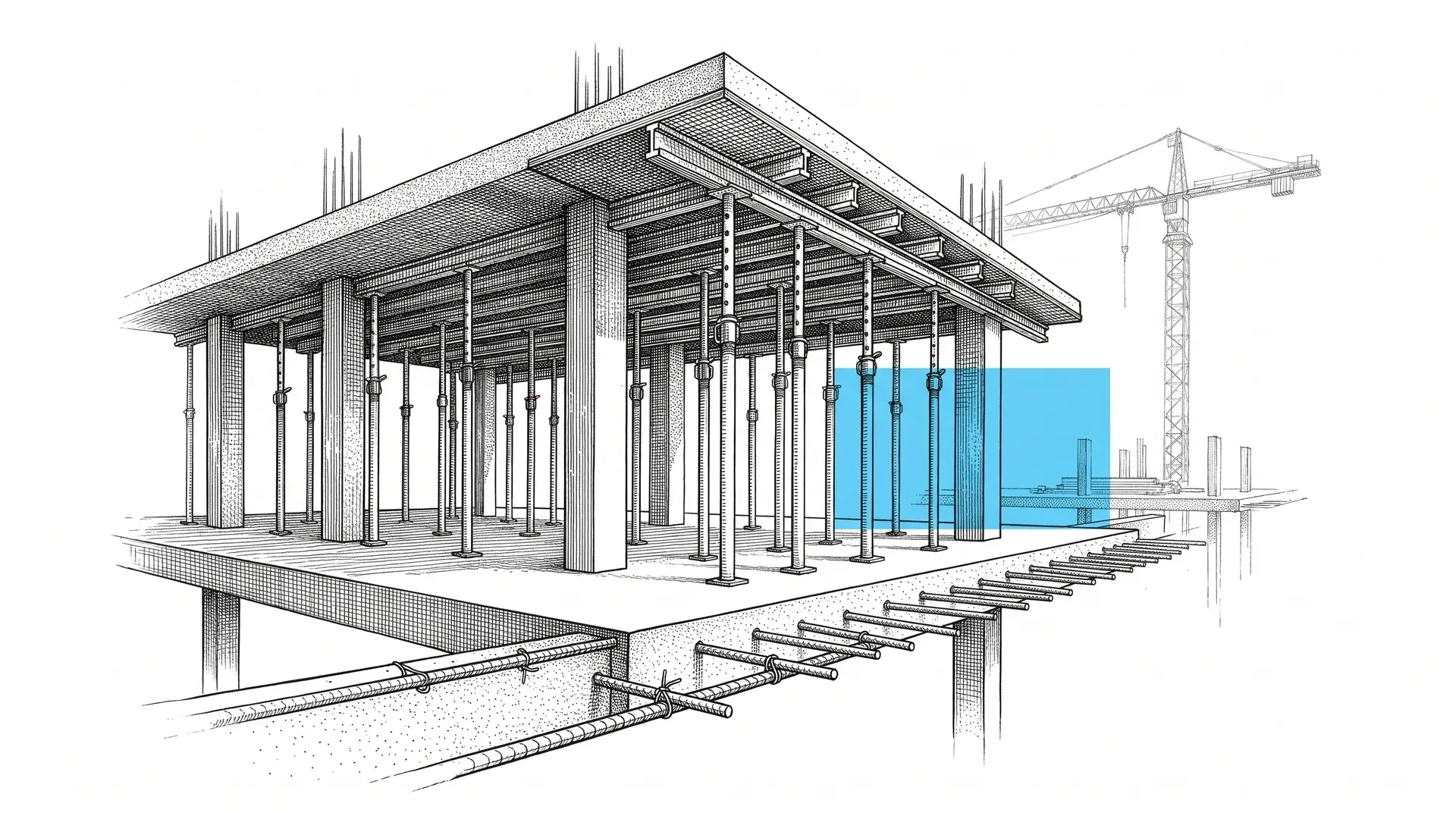
Industry terminology is what a specialist brings: the vocabulary of the field. Slab edge has more than one acceptable French rendering, and a good translator will pick a defensible one.
Your terminology is the subset your firm has settled: the terms that appear across your projects, defined, translated and approved once by your engineers. In Technitrad’s NMS term base, which holds over 15,000 terms, slab edge is rive de la dalle. If your drawings say one thing and the next translator picks another, both are defensible and the document is still inconsistent.
The difference is not skill. It is information the translator does not have unless someone gives it to them. Without it, your engineers correct the same terms on every project, and they are tired of it.
What it costs to leave terms to chance
Terms are a small share of the words and a large share of the errors. Terminology is required for about 4 to 6% of the words in a text (Guy Champagne, The Economic Value of Terminology). Yet wrong terms caused 47% of the translation errors in General Motors’ study of its own translations (SAE J1930, Woyde 2005).
And the later a term is fixed, the more it costs: 10 to 20 times more at the end of the translation cycle than at the start (Xerox, JD Edwards).
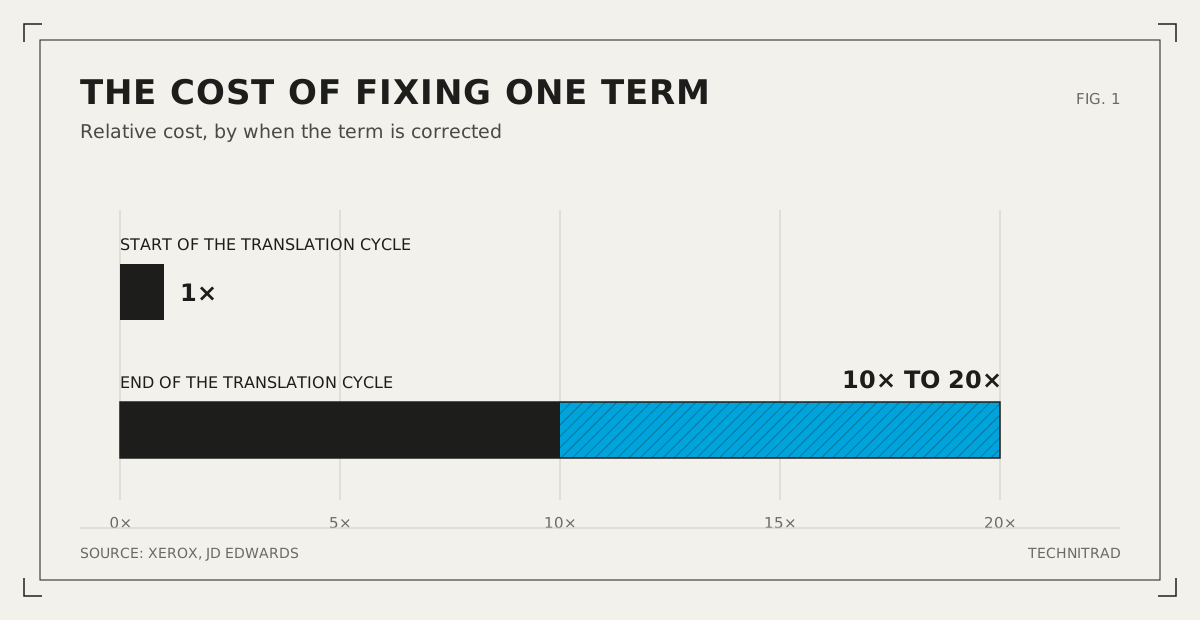
A term corrected in the term base before translation is corrected once. A term corrected after delivery is corrected in every document, every drawing and every revision that already used it.
How terminology management works
- Define. Your provider learns your projects, your document types and your audience, and agrees with you on what the term base must cover.
- Collect. You share what you have: past translations, bilingual specifications, glossaries, even unilingual lists.
- Extract. The key and frequent terms are pulled from that material, in both languages where translations exist, and translated where they do not.
- Validate. Your engineers approve the terms that matter. This is the step that takes time, and the one that makes the rest work.
- Apply. Every translator on every project uses the approved terms, and new terms are settled before each project starts.
With Technitrad, the term base is yours, whether you stay with us or not.
At Technitrad, NEOLO does the extraction, and our terminologists check the result before your team sees it. NEOLO’s term extraction scores 67.3 F1 on ACTER, the standard benchmark; the best published result is 61.2.
Who benefits most
Every document benefits, and some benefit more: long, repetitive and technical content, the kind regulated and engineered industries produce. Specifications, drawings and reports for one project repeat the same terms hundreds of times, so one decision made early pays back on every page.
Start before you translate
The earlier a term is settled, the cheaper it is. A concept named consistently in the English, from the first draft of the specification, is far more likely to be translated consistently. Settle it before the translation starts and the specialist you hired can do what you hired them for.
See your own terms first
That is the point of a term base. Upload a recent translated deliverable and we return a short report of every term translated more than one way, free and confidential. It shows you what terminology management would change in your own documents.
Are your translations consistent? Get a free terminology check.